
Bloom
Six Levels of Thinking
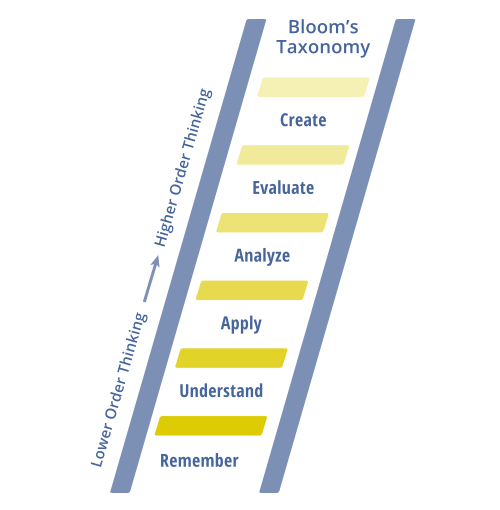
Originally developed in the 1950’s, Bloom’s Taxonomy of Learning has subsequently been updated and used in all sectors of education. It is a hierarchy of learning based on the cognitive, physical and emotional domains of learning, organized across six main categories, starting with lower order thinking and moving upward to higher order thinking skills.
The six major categories starting with lower order thinking
- Remember
- Understand
- Apply
- Analyze
- Evaluate
- Create
Pros of Bloom
- Helps both students and teachers identify what they’re aiming for in the learning / teaching process.
- Provides clear and concise language for explaining learning outcomes.
- Helps us identify the range of thinking processes across cognitive domains to ensure we provide comprehensive learning experiences.
Cons of Bloom
- May lead to learning outcomes that overly focus on higher order thinking, disregarding how the lower and higher order levels intersect (e.g., you need to remember/learn some concepts before you can evaluate and create).
- Does not include the spiritual aspect of learning (see LaFever section).
- Overly focusing on how to articulate learning outcomes using Bloom’s list of verbs misses the crucial point of aligning learning outcomes with course activities.
Handouts
Additional Resources
- University of Waterloo — Bloom’s Taxonomy [Web Page] provides a useful starting point in identifying how to apply Bloom to writing learning outcomes
- Vanderbilt University Center for Teaching and Learning — Bloom’s Taxonomy [Web Page] offers a brief overview of the history of Bloom and a basic introduction on how to apply it