
Fink
Six Components of Significant Learning
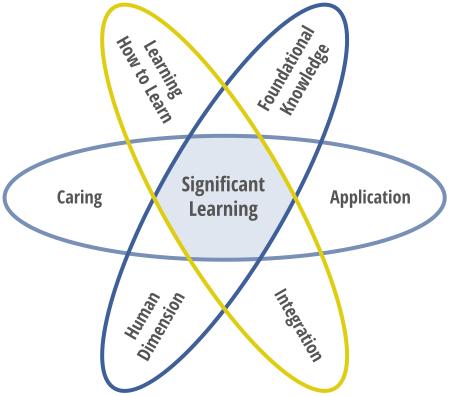
Fink (2013) presents another way to consider the design of significant learning experiences. He identifies and applies six interconnected components.
The six interconnected components:
- Foundational Knowledge - students’ ability to remember and understand information
- Application — learning a new action, whether a new skill, way of thinking or how to manage projects
- Integration - making connections between ideas, learning experiences or from one area of life to another
- Human Dimension — learning about yourself and others
- Caring - developing students’ interest in or valuing of the topic
- Learning How to Learn — helping students become self-directed, self-regulated learners so they can learn beyond the course
Pros of Fink
- provides a framework for aligning learning outcomes with assessment
- includes focus ‘learning how to learn’ and how to promote skills students will use beyond learning content
- it identifies the importance of learning that extends beyond the classroom experience
Cons of Fink
- if you’re new to writing learning outcomes, Fink ‘s taxonomy is not as clear as Bloom’s in terms of how to apply it
- creating assessments that assess ‘caring’ can be hard, depending on the discipline
- fewer online resources to support how to apply Fink
Questions to Ask
Here are some writing prompts/questions for you to consider when writing learning outcomes using Fink’s taxonomy
Foundational Knowledge
- What key information (facts, terms, formula, concepts, relationships) is important for students to understand and remember in the future?
- What key ideas or perspectives are important for students to understand in this course?
Application
- What kinds of thinking are important for students to learn:
- Critical thinking, in which students analyze and evaluate?
- Creative thinking, in which students imagine and create?
- Practical thinking, in which students solve problems and make decisions?
- What important skills do students need to learn?
- What complex projects do students need to learn how to manage?
Integration
- What connections (similarities and interactions) should students recognize and make…
- Among ideas within this course?
- Among the information, ideas, and perspectives in this course and those in other courses or areas?
- Between material in this course and the students’ own personal, social, and work lives?
Human Dimension
- What can or should students learn about themselves?
- What can or should students learn about interacting with people they may encounter in the future?
Caring
- What changes would you like to see in what students care about, that is, any changes in their…
- Interests?
- Values?
- Feelings?
Learning How to Learn
- What would you like for students to learn about…
- How to be a good student in a course like this?
- How to engage in inquiry and construct knowledge with this subject matter?
- How to become a self-directing learner relative to this subject? That is, have a learning agenda of what else they need and want to learn and a plan for learning it?
Handouts
Additional Resources