
Decolonization, Reconciliation & Indigenization
Decolonization in Education
Most of us are familiar with the term ‘decolonization,’ but perhaps less clear about what this term means in education, and more specifically, within the realms of our day-to-day teaching. We cannot create truly inclusive and engaging teaching and learning spaces without addressing the historical and ongoing effects of colonialism.
Content, pedagogies, and the structures that support our work as instructors are all based on colonial systems. NIC’s Indigenization Plan — Working Together states that, “The reclamation, recovery, resurgence, and renewal of Indigenous culture, language, and holistic relationships with self, spirit, land, community, and others is at the heart of decolonization” (p. 15).
For faculty, decolonization in education requires us to engage in an intentional process of challenging, unsettling, and transforming systems, practices, and assumptions that privilege colonial worldviews, while restoring space, authority, and legitimacy to Indigenous and other historically marginalized ways of knowing, being, and learning. It is a process, not a product or final destination. It is not a checklist to be fulfilled, or a metaphor for general inclusion. The process of decolonization is ongoing and iterative. Rather than asking us to erase Western knowledge, it requires us to decenter its dominance.
At its heart, decolonization asks us to shift from a paradigm of control and dominance toward one of relationship, respect, and responsibility.
How can we decolonize our teaching?
Along with advocating for changes in systems and policies, we can:
-
acknowledge Indigenous lands and relationships meaningfully at the beginning of class (beyond performative statements) that reflect an understanding of our own positionality
-
rethink assessment practices that privilege certain ways of thinking or communicating and include opportunities for students to demonstrate their learning in diverse ways. Include oral traditions, storytelling, and land-based learning in our teaching
-
examine whose knowledge is included in our teaching, questioning Eurocentric norms that position Western knowledge as neutral, universal, or superior
-
educate ourselves about the ongoing impacts of colonialism, understanding how histories of land dispossession, cultural suppression, and systemic inequity continue to shape learners’ experiences today
-
bearing in mind our own positionality and ‘what is’ and ‘what is not ours’ to share, respectfully center Indigenous knowledge systems and voices, not as ‘add-ons,’ but as valid, living knowledge systems with their own epistemologies, pedagogies, and ethics. Explore ways of co-creating curriculum with local Indigenous communities and knowledge keepers
-
redistribute power in teaching and learning, shifting authority away from solely institutional or instructor control toward relational, community-informed, and learner-centered approaches
Reconciliation in Education
Reconciliation in education refers to the ongoing process of acknowledging the harms of colonialism—especially the legacy of the residential school system—and actively transforming educational systems so they are more just, inclusive, and responsive to Indigenous Peoples. In Canada, this work is grounded in The Truth & Reconciliation Commission of Canada: Calls to Action, particularly those focused on education (Calls to Action 6–12 and 62–65).
Reconciliation begins with truth:
-
The history and impacts of the Indian Residential School system
-
Ongoing systemic inequities affecting First Nations, Inuit, and Métis learners
-
How curriculum and institutional structures have privileged Western knowledge systems
It is not simply about adding content, a single workshop, or simply adding a land acknowledgement; it is about confronting structural injustice and advocating for structural change.
Reconciliation requires Indigenous leadership.
While “Decolonization refers to the process of deconstructing colonial ideologies of the superiority and privilege of Western thought and approaches,” reconciliation, “Reconciliation is about addressing past wrongs done to Indigenous Peoples, making amends, and improving relationships between Indigenous and non-Indigenous people to create a better future for all” (Pulling Together: A Guide for Curriculum Developers)
Reconciliation in education involves systemic and relational change.
What does reconciliation look like in our teaching?
Curriculum: Reconciliation means respectfully integrating Indigenous histories, perspectives, and contemporary realities across disciplines. It requires us to move beyond “add-on” units toward meaningful inclusion of Indigenous scholars and voices in programs and courses. Doing so, requires us to remember once again, ‘what is’ and ‘what is not ours’ to share
Pedagogy: Reconciliation means honoring Indigenous ways of knowing, being, and learning. It means teaching in ways that value relationality, community, land-based learning, and storytelling. It means reflecting on whose knowledge is centered in current course materials, revising content, and designing assessments that allow multiple ways of demonstrating learning (e.g., inviting students to demonstrate their learning in a modality that resonates with them rather than allowing only one way to show learning). It is a pedagogy founded on creating culturally safer classroom spaces, for example giving time to relationship and community building.
Indigenization in Education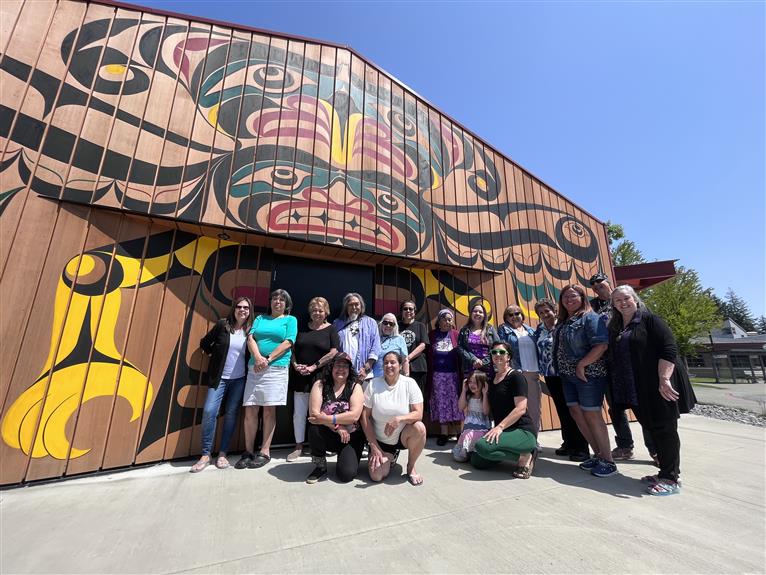
Indigenization in education refers to the intentional and ongoing process of transforming educational systems so that Indigenous knowledges, perspectives, languages, and pedagogies are meaningfully integrated — not added as an afterthought but embedded as valued and foundational ways of knowing.
In the Canadian context, Indigenization is closely connected to the Truth and Reconciliation Commission of Canada: Calls to Action, and to Indigenous rights frameworks such as the United Nations Declaration on the Rights of Indigenous Peoples (UNDRIP)and Declaration on the Rights of Indigenous Peoples Act (DRIPA).
What does Indigenization look like in our teaching?
Recognizing our positionality and acknowledging the boundaries of what it is/isn’t appropriate for us to teach:
1. Centering Indigenous Knowledge Systems — Recognizing that the diverse Indigenous ways of knowing — relational, land-based, oral, holistic — are valid and rigorous knowledge systems alongside Western academic traditions. This includes spiritual development
2. Embedding Indigenous Perspectives Across Curriculum — Not limiting Indigenous content to a single lecture or unit, but integrating it meaningfully and respectfully throughout courses and programs
3. Transforming Pedagogy- Honoring teaching approaches such as: Storytelling, community engagement, land-based learning, and learning through relationship. This also includes acknowledging the concept of holism: “Indigenous pedagogies focus on the development of a human being as a whole person. Academic or cognitive knowledge is valued, but self-awareness, emotional growth, social growth, and spiritual development are also valued” (Pulling Together: A Guide for Curriculum Developers)
|
Decolonization focuses on challenging and dismantling colonial structures, decentralizing Eurocentric knowledge systems and pedagogies. Reconciliation focuses on repairing relationships and addressing historical harm. Indigenization focuses on embedding Indigenous leadership and ways of being and knowing in education. |
In the next sections, we’ll explore resources available to support developing our teaching, as well as specific examples of how to approach decolonization, reconciliation and Indigenization in different subject matter areas.