
Alternative Assessment
Course Redesign Alternative Assessment
Getting Started: Considerations and Best Practice
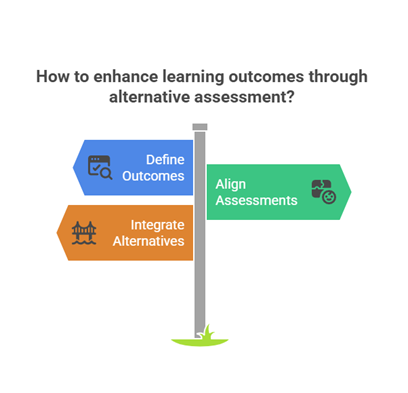
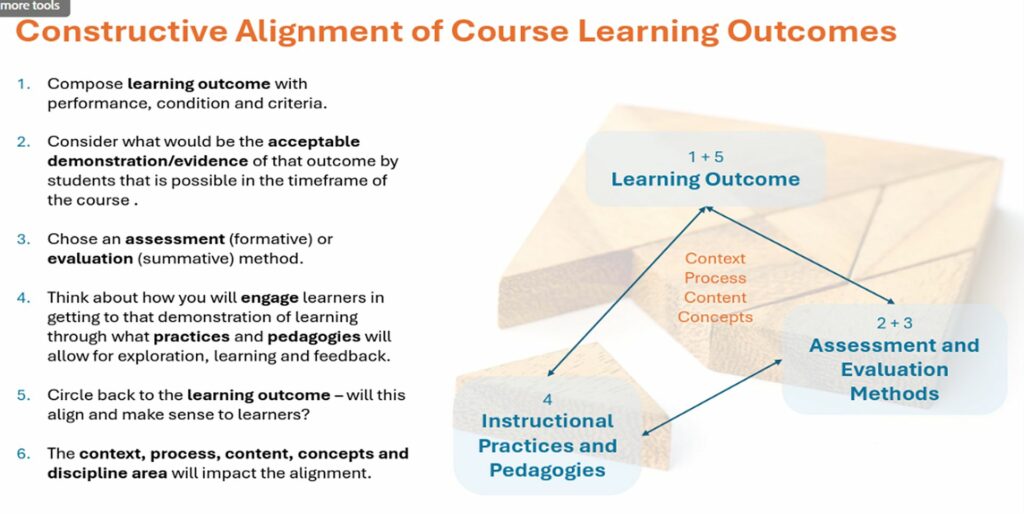
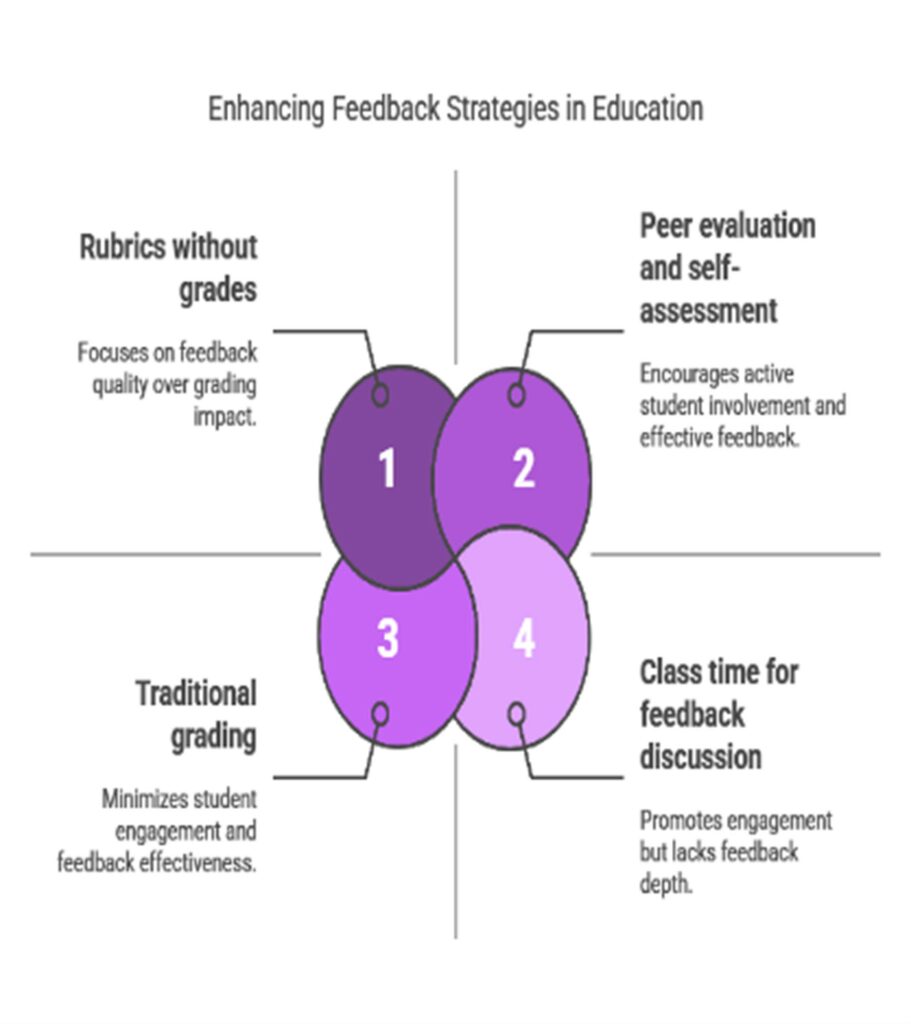
When changing an assessment or enhancing an existing one, there are steps to be considered. The resources available on Teach Anywhere consistently emphasize to start small. Perhaps you begin with adjusting a rubric or you replace an assessment that you inherited when you took over the course and that you feel does not accurately evaluate student learning.
List of Helpful Resources
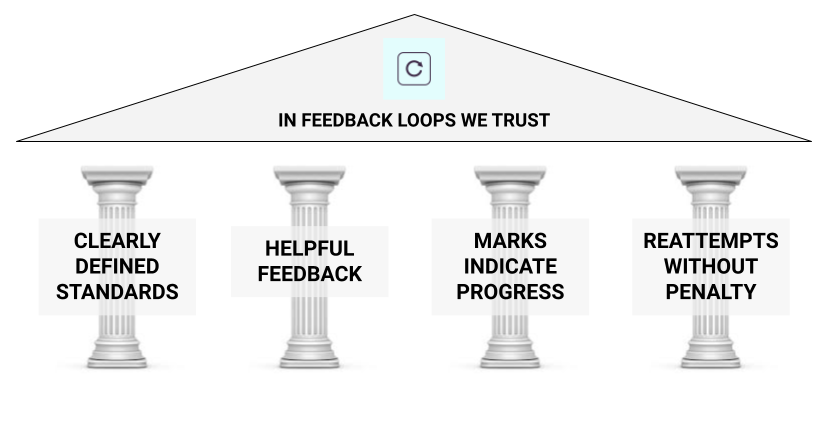
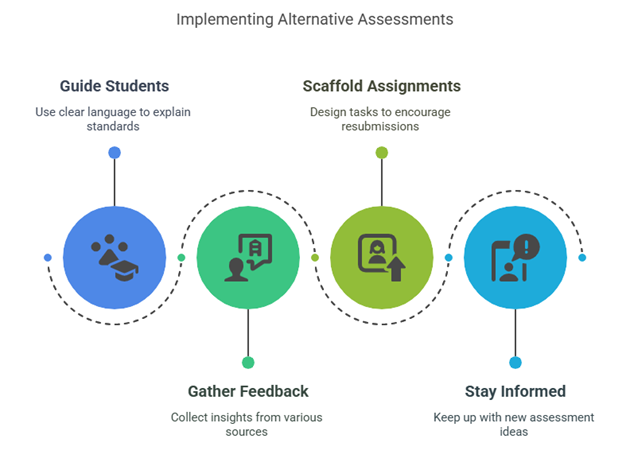
These pages about alternative assessment have been developed with the 4 pillars of alternative assessment in mind.
Tips to Begin
The 4 pillars are indicated in relevant areas throughout.
Top of Page
Learner Readiness + Professionalism Checklist
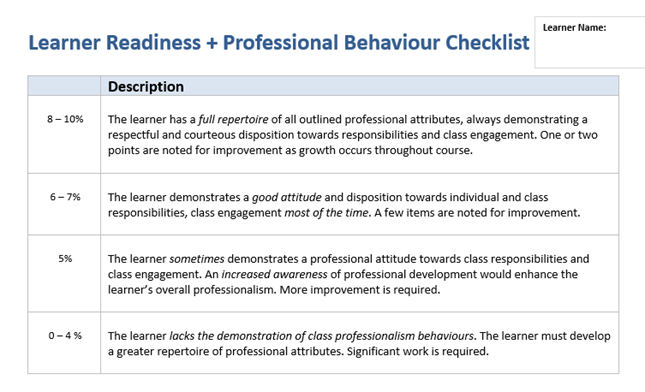
Participation marks are controversial in post-secondary education are often controversial due to their subjective nature for both students and instructors. Bain (2019) argues that instructors should view participation grades as opportunities for “skill building “ opportunities and offers strategies to help manage this approach.
CTLI provides an alternative to traditional participation grades, building on Bain’s suggestions by encouraging students to self-assess their behavior on the classroom. The learner behavior checklist replaces instructor – observed participation, shifting responsibility and accountability for behavior to the students. This way, any deduction marks are made by the students themselves, not the instructor.
As Bain (2019) suggests, the checklist is provided at intervals throughout the semester, allowing students ample time to identify challenges and adjust. It also includes a section for reflection to promote metacognition.
The checklist is provided here in a Word document, enabling instructors to customize descriptions and criteria. Alternatively, this can be done as a large group activity, involving students in setting the criteria in the early part of the semester.
Ungrading
 |
 |
 |
 |
 is an Associate Professor at the Centre for Learning & Teaching at the American University in Cairo, Egypt. She is a full-time faculty developer and educator teaching digital literacies and intercultural learning.
- Bali, M. et. al. (January 5, 2021) Alternative Approaches to Grading | Video
- Bali, M. (March 23, 2019). Reflections on Ungrading for the Fourth Time | Blog post
- Bali, M. (March 20, 2018). Ungrading My Class — Reflections on a Second Iteration | Chronicle of Higher Education Article
 Susan is a professor of anthropology at University of Notre Dame. She’s been teaching college students for over 30 years and for much of that time she was a conventional grader. Since around 2106 she has given up grading except for handing in grades at the end of term.
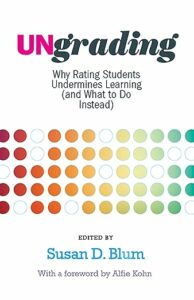
- Blum. S. (December, 2020). Ed. Ungrading: Why Rating Students Undermines Learning (and What to do Instead)?| Forward by Alfie Kohn | Book from West Virginia Press
- Blum story within article by Supiano, B. ( July 19, 2019). Grades Can Hinder Learning. What Should Professors Use Instead? | Web Page
- Blum, S. (November 14, 2017). Ungrading: The significant learning benefits of getting rid of grades. Inside Higher Ed. | Web Page
- Blum, S. (December 20, 2016). Living and Learning with Risk: Against Rubrics and Grades. How “Ungrading” Allowed my Students to Try Some New Things | Blog post
 Denial is the Bright Distinguished Professor of American History, Chair of the History department, and Director of the Bright Institute at Knox College in Galesburg, Illinois.
- Denial, C. (November 9, 2020). Ungrading in a Pandemic | Blog Post
- Denial, C. (December 11, 2019). More Thoughts About Grades | Blog Post
- Denial, C. (October 16, 2017). Making the Grade | Blog Post
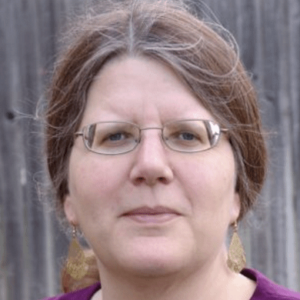 Laura is an instructor at the University of Oklahoma where she joined in 1999. She’s been teaching fully online courses since 2002. She teaches general education courses in the humanities.
- Gibbs, L. (2020). Getting Rid of Grades | Book chapter in “Ungrading Why Rating Students Undermines Learning (and What to Do Instead)” | Blog Post
- Gibbs, L. (2016). (Un) Grading: It can be done in college | Guest post on Education Week Teacher | Blog Post
- Gibbs, L. (2016). Teaching: Ungrading for More Feedback. Personal Blog Post found on site Anatomy of an Online Course | Blog Post
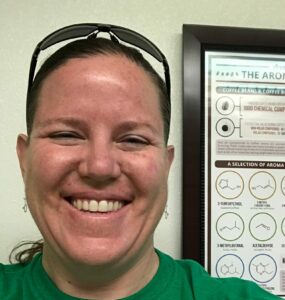 Since 2002, Clarissa has been a full-time chemistry instructor at Central New Mexico Community College. In her classes she uses ungrading, blogs and encourages open and engaged pedagogies. The story of all of her ungrading experiences are found on her main blog website at: https://clarissasorensenunruh.com/ungrading/
- Sorensen-Unruh, C. (January 14, 2020). Ungrading: What is it and why should we use it | Blog post on ChemEd XChange
- Sorensen-Unruh, C. (January 3, 2020). Ungrading: Prototype II (General Chemistry II) | Blog Post
- Sorensen-Unruh, C. (Feburary 10, 2019). Ungrading: A Series (Part 1) | Blog Post
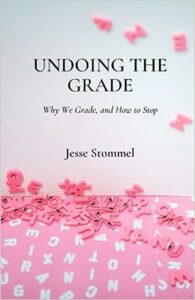
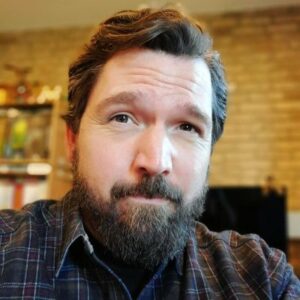 Jesse Stommel has written some seminal blog posts on this topic over the past few years and has ungraded his English, digital humanities, film and communications courses for decades. He is co-founder of Digital Pedagogy Lab and Hybrid Pedagogy. Jesse has been an educator since 1999 and currently teaches at the University of Denver.
- Stommel, J. (2023). Ungrading for Equity | Blog Post
- Stommel, J. (2023). Undoing the Grade: Why We Grade, and How to Stop. Hybrid Pedagogy Inc., Denver, CO. Overview Post and Open Version
- Stommel, J. (May 9, 2022). Ungrading and Alternative Assessment | YouTube video of Presentation
- Stommel, J. (January 3, 2022). Compassionate Grading Policies | Blog Post
- Stommel, J. (June 11, 2021). Ungrading: An Introduction | Blog Post
- Stommel, J. (June 2, 2021). Grades are Dehumanizing: Ungrading is no Simple Solution | Blog Post
- Stommel, J. (March 3, 2020). What if We Didn’t Grade? A Bibliography. | Blog Post
- Stommel, J. (February 6, 2020). Ungrading: an FAQ. | Blog Post
- Stommel, J. (March 11, 2018). How to Ungrade | Blog Post
- Stommel, J. (October 26, 2017). Why I Don’t Grade | Blog Post